AI UGC Ads That Don't Look Fake (and Don't Break the Rules)
Most AI UGC looks fake for the same five reasons: perfect skin, studio light, empty rooms, posed smiles, and a product held like a trophy. Here's the same product prompted two ways, the details that fix it, and the rules on fake testimonials you can't skip.
 Moss5 min read
AI UGC ads look fake when they look like ads: perfect skin, studio lighting, an empty background and a product held up like a trophy. To make AI UGC look real, prompt for what a phone camera actually captures: front-camera framing, mixed indoor light, a lived-in room, natural skin texture, a mid-sentence expression, and the product held casually close to the lens. Then follow the rules: an AI person can demonstrate a product, but can't pretend to be a real customer giving a testimonial.
Key takeaways
- The "AI look" comes from studio polish, not from the AI itself. Ask for phone-camera flaws and it disappears.
- Prompt the room, the light and the moment, not just the person: claw clip, toothbrush cup, warm vanity bulb, mid-sentence.
- Hold the product like a person does: close to the lens, label facing camera, thumb over the lid.
- Don't present an AI person as a real customer. In the US, the FTC's rule on fake reviews bans AI-generated testimonials that pretend to come from real buyers.
- Label AI content where the platform asks you to (TikTok and Meta both have AI labels).
Same product, two prompts
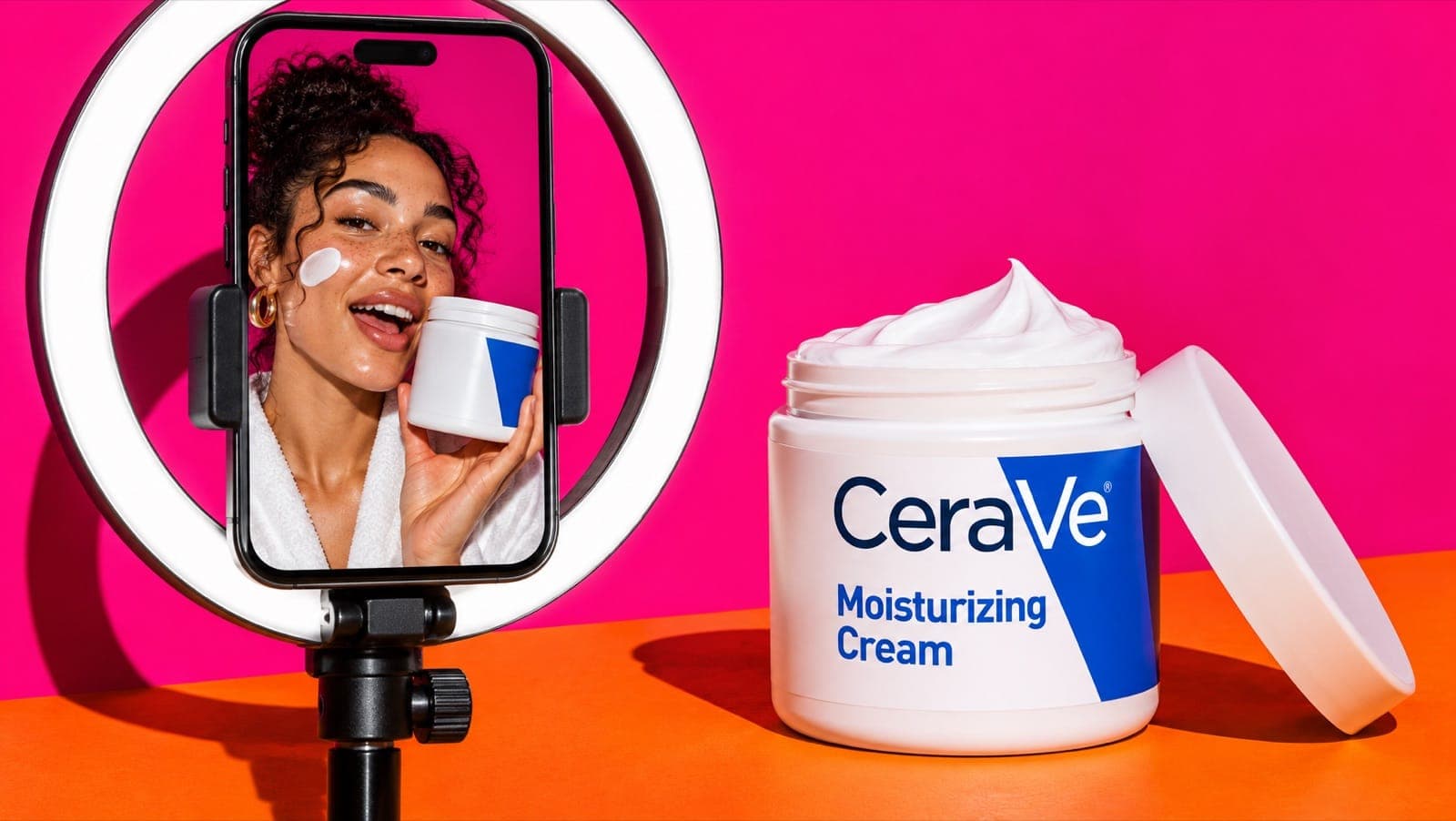
We generated both images below with the same model (GPT Image 2.6) and the same product, a CeraVe Moisturizing Cream tub. Only the prompt changed.
The prompt most people write
Advertising photo of a smiling young woman with perfect makeup holding a CeraVe Moisturizing Cream tub next to her face, looking at the camera, studio lighting, seamless pastel background, glossy commercial retouching.
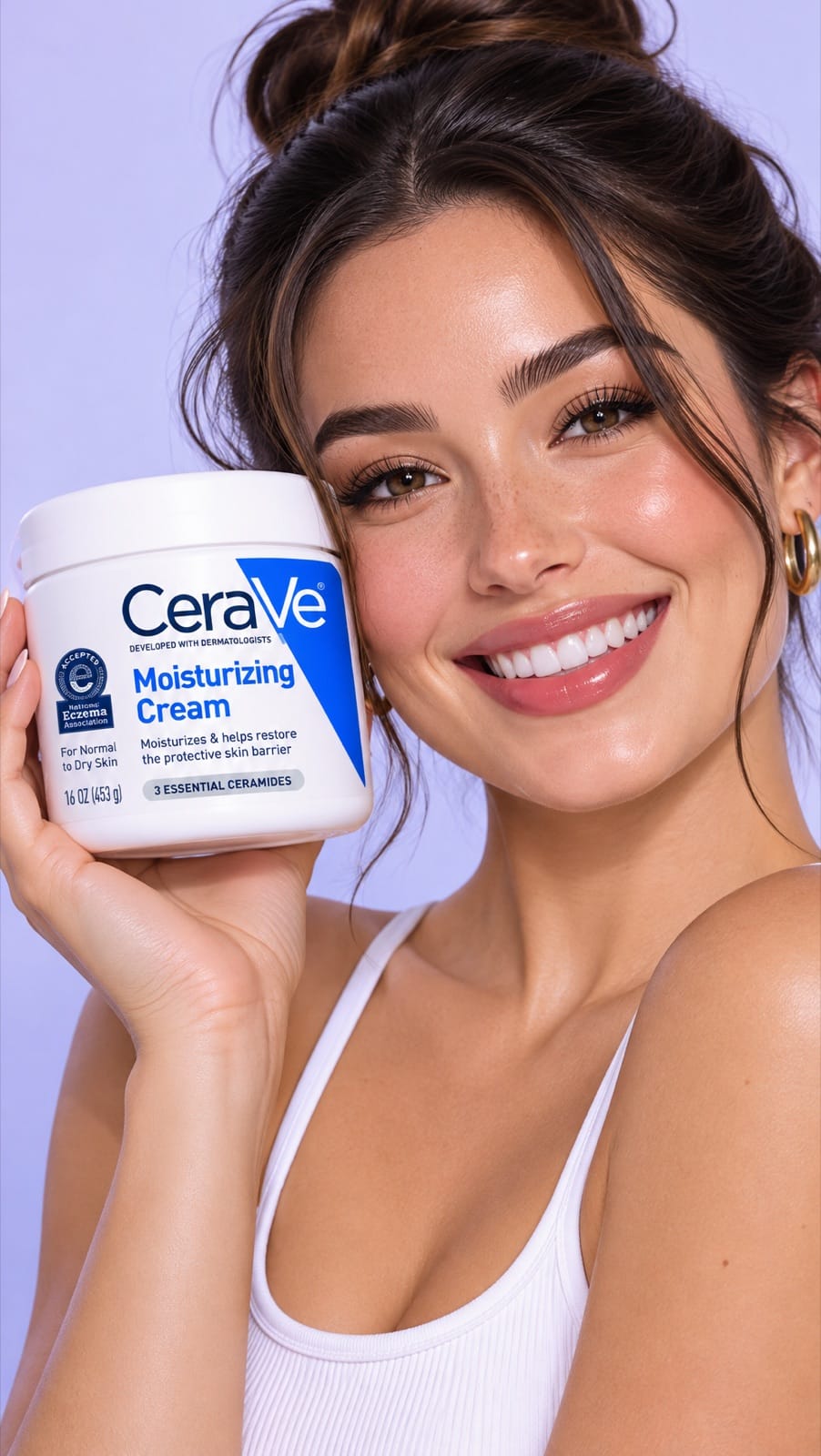
It's a good image. It's also obviously an ad, and on TikTok or Reels people scroll past ads in under a second.
The prompt that looks like UGC
Candid front-camera phone selfie, vertical, of a woman in her late 20s in a small slightly messy bathroom, hair in a claw clip, light under-eye shadows and natural skin texture, no makeup, mid-sentence expression as if talking to her followers. She holds a CeraVe Moisturizing Cream tub close to the lens with the label facing the camera, thumb partly over the lid. Mixed light from a window and a warm vanity bulb, slight phone-camera grain and softness, towel and toothbrush cup visible behind her. Looks like a real TikTok frame, not an ad.
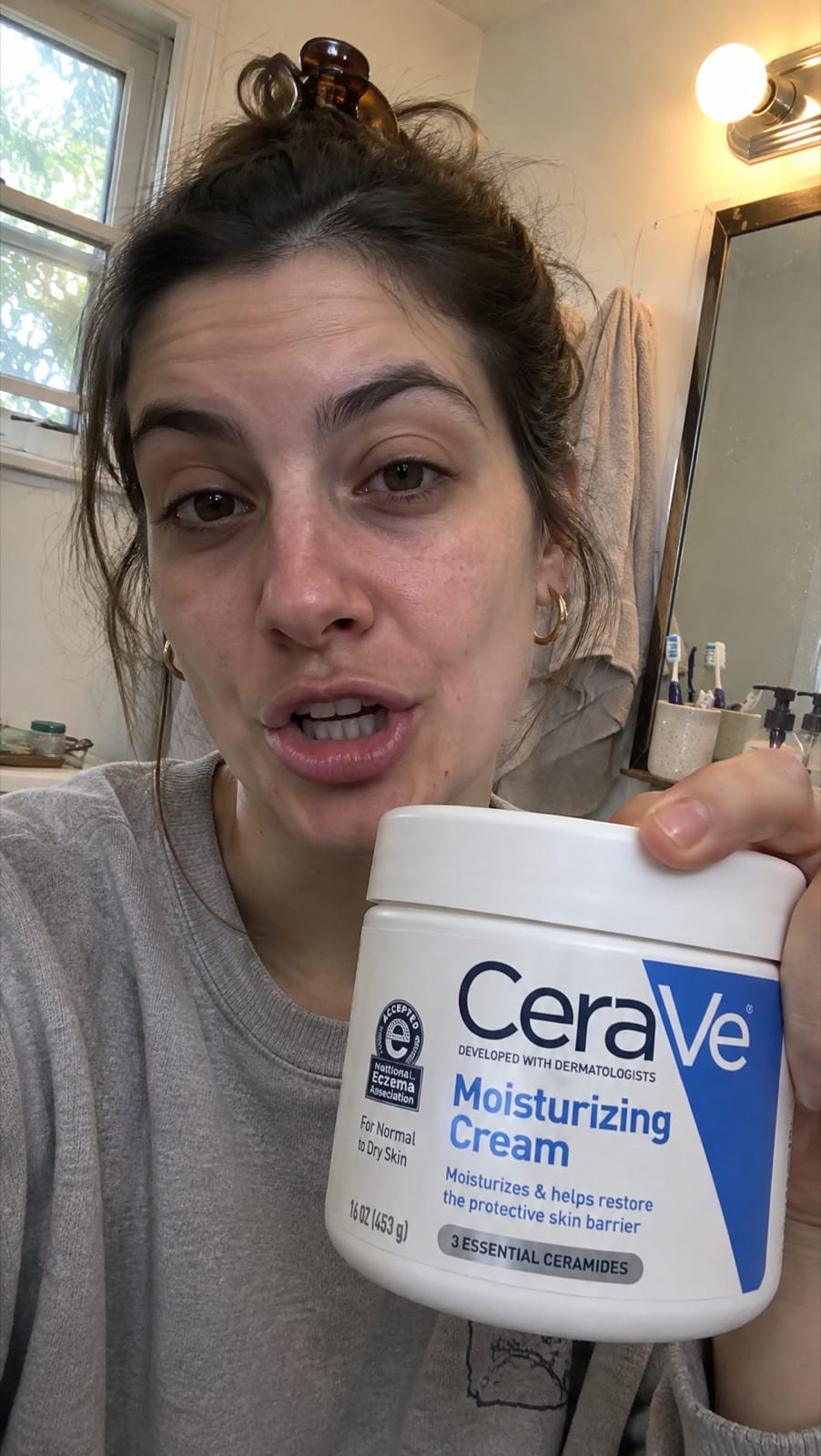
Same product, same label accuracy, completely different feel. It reads as someone talking to their followers, which is exactly why UGC works.
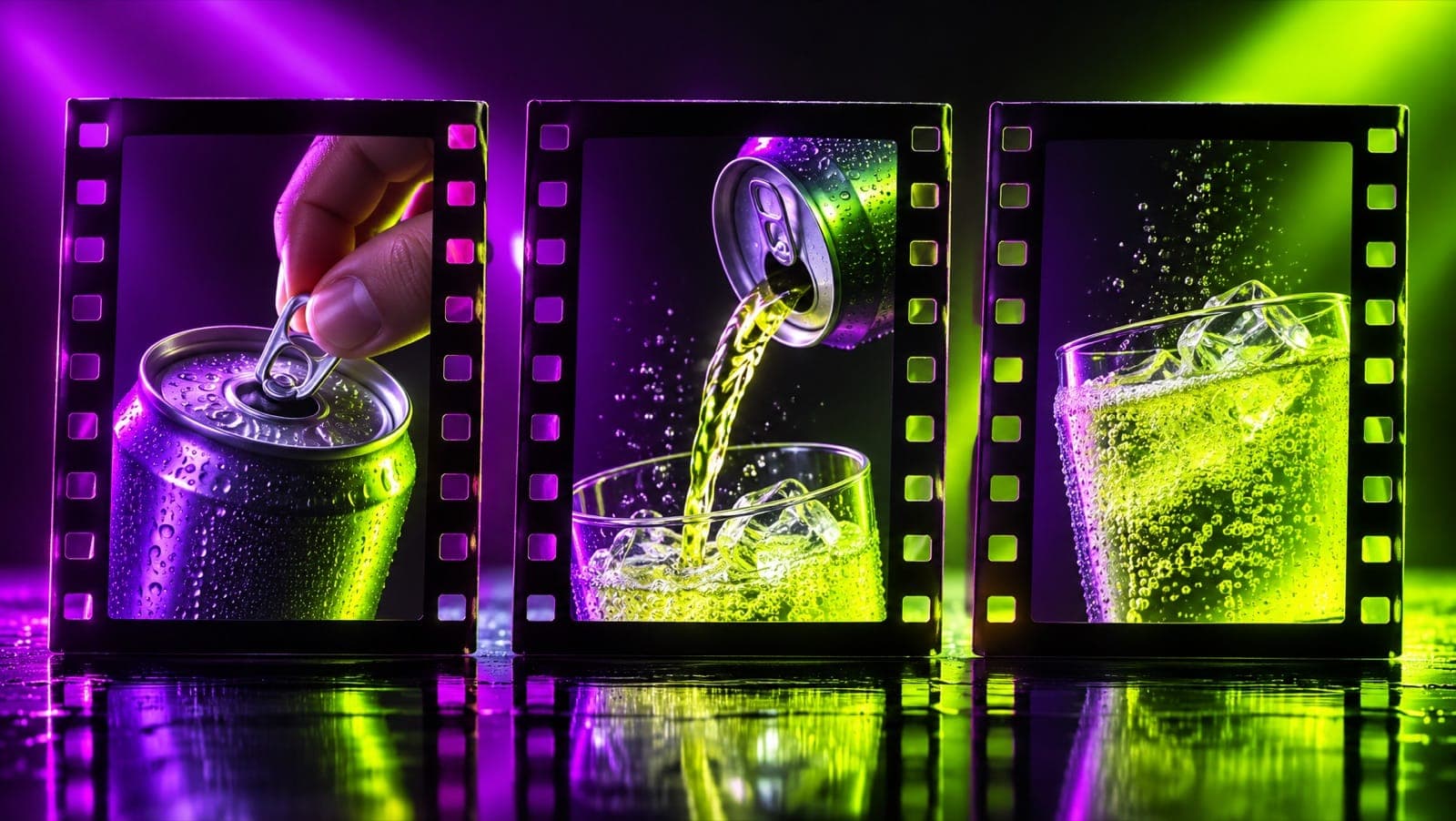
It works for other categories too. Here's a drink review set in a parked car:

The 5 things that make AI UGC look fake (and the fix)
| What looks fake | Why | Prompt this instead |
|---|---|---|
| Flawless skin and makeup | Real phone selfies show texture, shine and shadows | "natural skin texture, light under-eye shadows, no makeup" |
| Studio or ring-light glow | Nobody films a quick review in a studio | "mixed window light and a warm vanity bulb", "overexposed sky through the windshield" |
| Empty, perfect background | Real rooms have stuff in them | Name 2–3 objects: "towel and toothbrush cup", "crumbs on the console" |
| Posed smile at the camera | People talk mid-sentence, mid-thought | "mid-sentence expression", "casual half-smile" |
| Product held up like a trophy | People hold things close and casually | "held close to the lens, label facing camera, thumb over the lid" |
Add "front-camera phone selfie, vertical, slight grain" to almost any UGC prompt. It does more than any other single phrase.
Turning the image into a UGC video ad
- Generate 3–4 stills with the realistic prompt and pick the one where the product looks right.
- Use the still as the start frame for a video model, so the person, room and product stay consistent. Our Seedance 2.5 test shows how the current models handle products.
- Keep each clip to one action: picks up the product, opens it, applies it, reacts.
- Write the script like speech, not ad copy: short sentences, "okay so", "I didn't expect this". Start with a hook from our TikTok hooks list.
- Add captions on screen in the native style. Most people watch with the sound off.
The rules: what AI UGC can and can't do
This part matters more than the prompts.
- No fake testimonials. In the US, the FTC's 2024 rule on fake reviews and testimonials bans reviews or testimonials that misrepresent who wrote them or whether they used the product, including AI-generated ones. An AI person saying "I've used this for 30 days and my eczema is gone" is a fake testimonial.
- Demonstration is fine. An AI presenter showing how to use a product, what's in the box, or how it compares, without claiming a personal experience, is a product demo.
- Claims still need proof. "Clears acne in 7 days" needs evidence whether a human or an AI says it.
- Label AI content. TikTok requires creators to label realistic AI-generated content, and Meta adds "AI info" labels to content it detects or that you disclose. Use the platform's label rather than hoping no one notices.
- Don't use real people's faces without permission, including look-alikes of creators or celebrities.
A good rule of thumb: if the ad would be a lie with a real actor reading the same script, it's a lie with an AI one.
When to use AI UGC vs real creators
| Use AI UGC for | Use real creators for |
|---|---|
| Testing 10 hooks before you spend on production | Testimonials and "I've used this for months" stories |
| Product demos, how-tos, unboxings | Before/after results on real skin, hair or bodies |
| Variations of a winning ad (new settings, new openers) | Building a relationship with a creator's audience |
| Launches before you have customers to film | TikTok Shop affiliate content |
The best setup for a small brand is both: AI to find the angle cheaply, real creators to scale the one that works. If you want one recurring AI face across your feed, see our worked example of how to make an AI influencer for your brand.
FAQ
What is AI UGC?
User-generated-content-style images or videos made with AI: a person filming themselves with a product on a phone, without a real creator or a shoot.
Why does AI UGC look fake?
Because most prompts ask for an ad: studio light, perfect skin, empty backgrounds, posed smiles. Real UGC is filmed on a phone in a lived-in room. Prompt for those details and the fake look goes away.
Is AI UGC legal?
Using AI to make product content is legal. Using an AI person to give a fake customer testimonial is not, in the US under the FTC's rule on fake reviews and testimonials. Label AI content where platforms require it.
Do AI UGC ads work?
They can work well for testing hooks and product demos, because you can make many variations cheaply. Find the angle that works, then decide whether to scale it with AI or with real creators.
Which AI model is best for UGC images?
In our tests GPT Image 2.6 handled realistic skin, rooms and readable product labels well; see our AI image generator test for the full comparison.
Mostly makes UGC-style images and videos from your own product photos, including an in-hand UGC format, so every variation keeps your real packaging.