How to Make an AI Influencer for Your Product Brand (Worked Example, 2026)
We designed an AI creator, cast her in three lifestyle photos and a talking clip with a real lip balm, and wrote down what worked, what broke, and which line in our own script would have been a problem.
 Moss7 min read
To make an AI influencer for your brand, design one consistent character (face, age, style, personality), generate a reference sheet so the face stays the same, then cast that character in photos and short videos with your real product as a reference. Label the posts as AI on TikTok and Instagram, and never have the character claim to have used the product.
Key takeaways
- Consistency comes from a reference sheet, not a better prompt. With one, our character looked like the same person across four images and a video.
- AI influencers suit lifestyle and "how I use it" content where a person makes the product feel real. They're weakest at close-ups of the product being used, where packaging and hands still go wrong.
- The product is the hard part. Our character stayed consistent; the lip balm's small print didn't.
- Disclosure is required on TikTok for realistic AI people, and US law treats fake testimonials as deceptive. A line like "this is the only lip balm I actually finish" shouldn't come from someone who doesn't exist.
What is an AI influencer, and when does it make sense for a small brand?
An AI influencer is a fictional, AI-generated person who appears in your brand's content the way a creator would: holding the product, using it, talking to camera. For a small brand, it's a way to put a consistent human face on posts without booking a creator for every shoot.
It makes sense when:
- you need lots of lifestyle posts (product in a bag, on a desk, at the gym) and can't shoot them weekly;
- you want one recognisable face across your feed, ads and product pages;
- you're testing angles and scripts before paying real creators to film the winners.
It doesn't replace real customer content. Reviews, before-and-afters and "I tried it for 30 days" have to come from real people. More on that below.
How we built one: the worked example
We used Mostly for every step. We picked a real product, Summer Fridays Lip Butter Balm in Vanilla, purely as a recognisable test subject. This isn't sponsored and the brand wasn't involved.
Step 1: Write the character, not just the face
The brief we used:
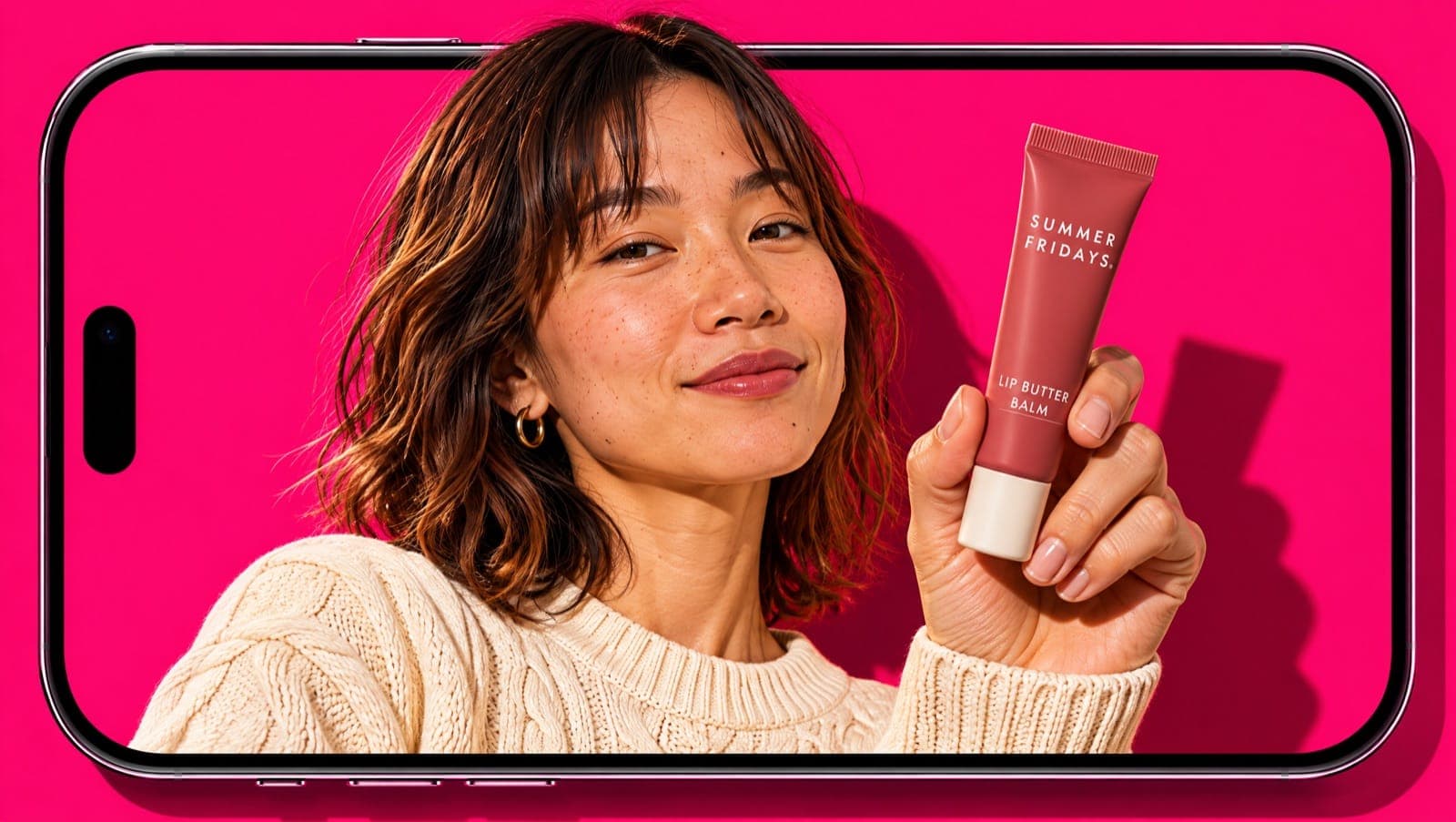
Woman, 26, Filipino-American, shoulder-length dark brown hair with soft curtain bangs, warm medium skin with a few natural freckles, small gold hoop earrings, oversized cream knit sweater, friendly relaxed smile, the vibe of a skincare-and-wellness TikTok creator who films in her bright apartment.
Pick an age, a style and a setting your buyer would recognise as one of them. Then write down what she posts about, how she talks, and what she'd never say. That last list is what keeps the account believable over time.
Step 2: Generate a portrait and a reference sheet
Mostly's avatar tool (AI UGC avatars are in beta as of November 2026) made a portrait first, then a multi-view reference sheet: front, side and full body. Both were ready within a couple of minutes. The sheet is what every later image and video is generated from, and it's the single biggest factor in consistency.
Step 3: Put her in scenes with the product
We generated three lifestyle shots with GPT Image 2.6 Sunburst, passing the reference sheet as a reference image and describing the scene and product in the prompt:
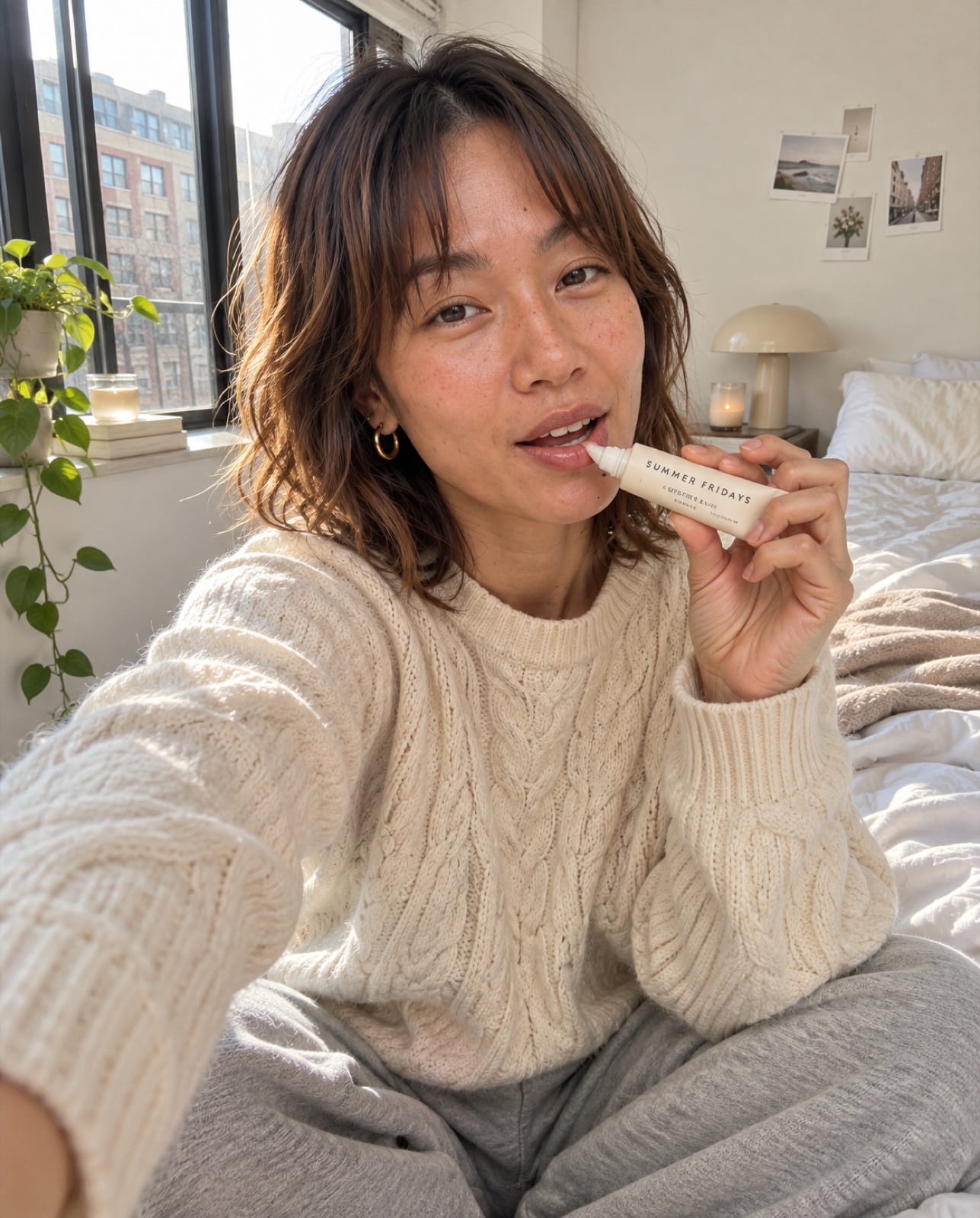
Shot 1, "applying it on her bed": selfie framing, morning light, cable-knit sweater. Reads like a real phone photo.
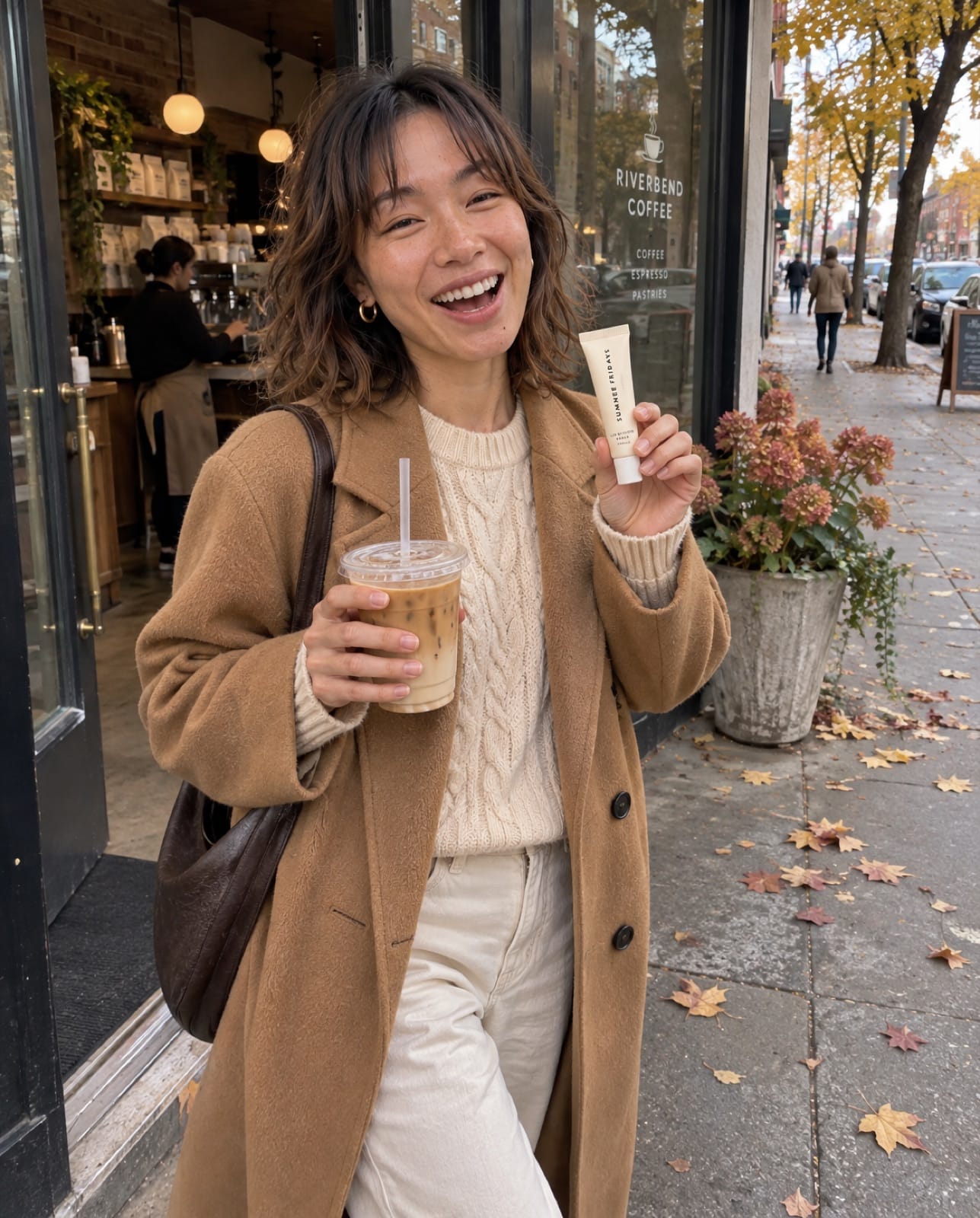
Shot 2, "coffee run": same face, bangs and hoops. Autumn street, camel coat added from the prompt.
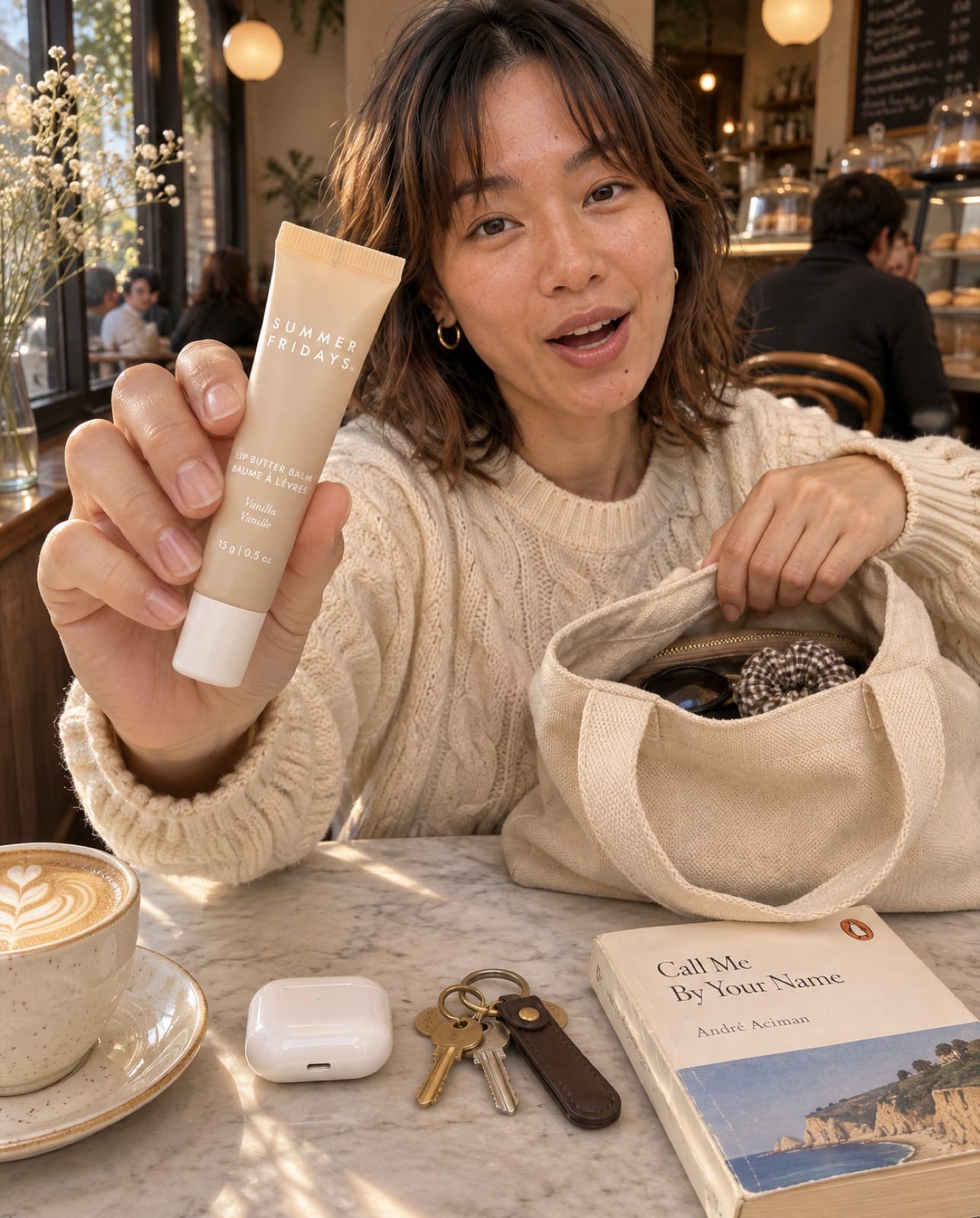
Shot 3, "what's in my bag": product closest to camera. The brand name is right, but the small print on the tube isn't real text.
What held up: the face. Across all three, plus this post's cover, she is clearly the same person, with the same bangs, freckles and earrings.
What didn't: the product's fine print. "SUMMER FRIDAYS" was spelled right every time; the line below it was invented. On the cover image the tube came out mauve instead of cream. If you're doing this for your own product, add 2–4 real photos of it as references too. A text description isn't enough. We left them out here to show what happens.
Step 4: Make her talk (and check the audio)
We cast the avatar in a 5-second vertical clip with Seedance 2.5 Flash, scripted to hold up the balm, say one line, and apply it.
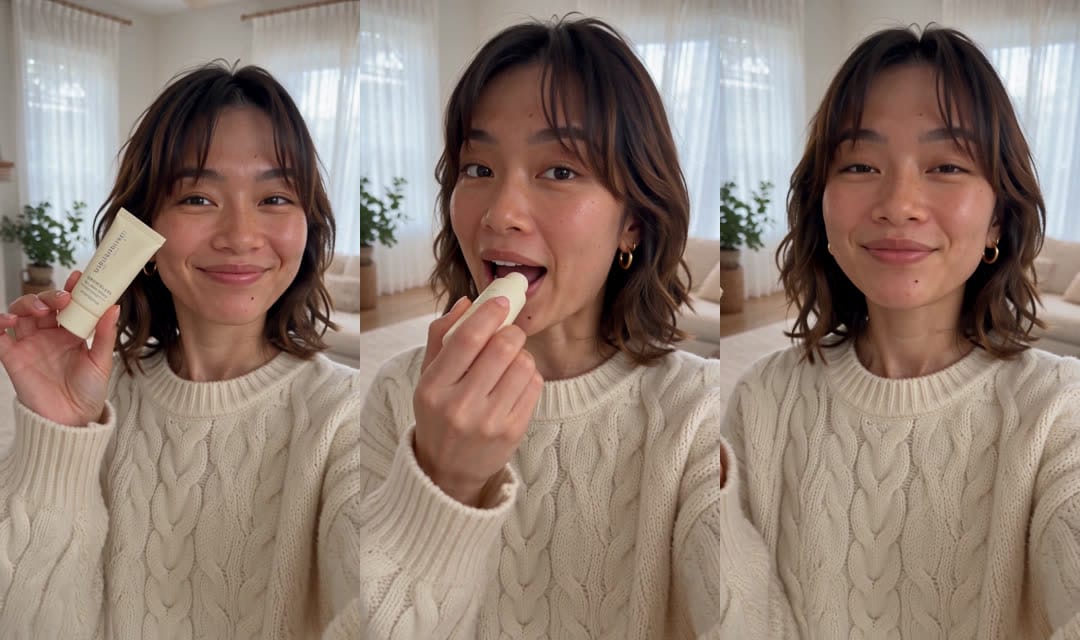
Seedance 2.5 Flash, 5 s, 720p. Same face as the photos. The tube label is unreadable, she puts the closed end to her lips, and the file came back with no audio track.
Two lessons. First, we didn't explicitly switch native audio on, and the clip arrived silent, so the spoken line never happened. Check the audio setting before you spend credits. Second, small hand-and-product actions (uncapping, applying) are where AI video still slips. Wide "holding it up and talking" shots are safer than close-ups of use.
The rules: disclosure and what your AI influencer can't say
This is the part most guides skip, and it's where a small brand can get hurt.
Label it on TikTok. TikTok's Community Guidelines require creators to label AI-generated or significantly edited content that shows realistic-looking people or scenes (TikTok's help page on AI-generated content). An AI influencer is exactly that. Use the "AI-generated" label toggle when posting. Ads have their own AI disclosure control in Ads Manager. TikTok Shop sellers have separate guidance on AI product content, so check the Seller Academy for your market too.
Don't fake a testimonial. The FTC's rule on consumer reviews and testimonials (in force since October 2024) bans testimonials that misrepresent that they come from someone who doesn't exist, and it explicitly covers AI-generated ones (FTC announcement). The FTC's own Q&A says using AI avatars in marketing isn't banned outright. The problem is an avatar presenting a fake experience.
Look again at the line we scripted: "Okay, this is the only lip balm I actually finish." That's a personal-experience claim from a person who doesn't exist. Don't post it. Safer versions:
| Don't have her say | Have her say instead |
|---|---|
| "This is the only lip balm I actually finish." | "Here's how to get the glossy look with one swipe." |
| "It cleared my skin in a week." | "Three ways to use it in your morning routine." |
| "I've tried everything, this is the best." | "Reviewers keep mentioning the vanilla scent. Here's why." (only if real reviews say so) |
The pattern: she can demonstrate, explain and style the product. She can't vouch for results from experience she never had. For anything results-based, use real customers. Our guide to AI UGC ads that don't look fake goes further on this.
Where AI influencers work best (and where they don't)
| Works well | Works poorly |
|---|---|
| Lifestyle placements: product in a bag, on a desk, on the go | Close-ups of the product being applied or opened |
| "How I style it" and "3 ways to use" formats | Before/after or results claims |
| Testing hooks and angles before paying creators | Live shopping and anything interactive |
| Consistent face across feed, ads and product pages | Small print and exact packaging without reference photos |
A practical way to start: use the AI influencer for two or three lifestyle posts a week, keep real customer content for social proof, and move the hooks that work to real creators. If you're planning what those posts should be, our list of TikTok hooks that sell products is a good source of opening lines.
FAQ
How do I make an AI influencer?
Write a detailed character brief (age, look, style, setting, personality), generate a portrait and a multi-view reference sheet, then generate every photo and video from that sheet with your product photos as extra references. Label the content as AI when you post.
Are AI influencers legal for brands?
Yes, with conditions. Platforms like TikTok require labels on realistic AI people, and in the US, testimonials that misrepresent a non-existent person's experience are banned by the FTC. Use the character to demonstrate and explain, not to claim results.
How do I keep an AI influencer's face consistent?
Use a reference sheet (front, side, full body) and pass it into every generation. In our test that kept one face across four images and a video. Prompt wording alone drifts.
What's the best AI influencer generator?
It depends on what you need: images, video, or both. For product brands, look for one that keeps the face consistent from a reference sheet and also takes your product photos as references, so the packaging comes out right.
Should I tell followers my influencer is AI?
Yes. It's required on TikTok for realistic content, it's honest, and audiences find out anyway. Many AI creator accounts state it in the bio and label each post.
Want to design your own AI creator and put her in a week of posts? Start in Mostly. Your product photos and avatar are used as references automatically.